


Ogheneruona Tejiri, Effurun
The Federal University of Petroleum Resources, Effurun (FUPRE), has recorded sweeping institutional transformation across academics, research, infrastructure, digital technology, renewable energy, and industry engagement within one year of the administration of the Vice-Chancellor, Prof. Ezekiel O. Agbalagba.
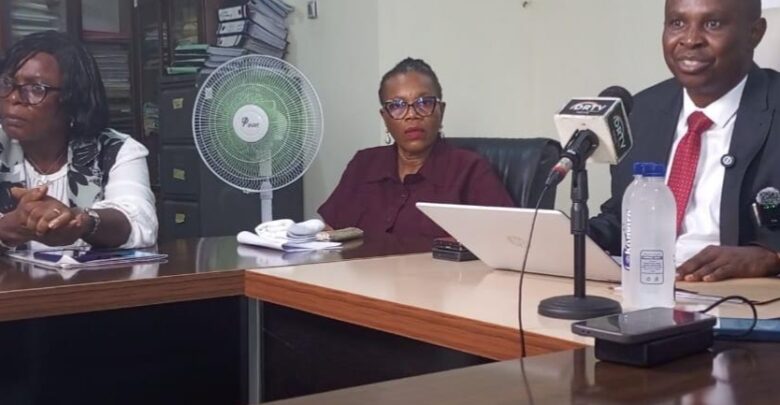
The Vice-Chancellor unveiled his administration’s one-year scorecard during a special media briefing with a theme, “Building a Strong Foundation for Global Excellence in Energy Education.”
Prof. Agbalagba described the occasion as a strategic moment of accountability and reflection aimed at presenting the progress made since the administration assumed office May 4, 2025.
He stated that the administration was driven by a clear vision to reposition FUPRE as a globally competitive, innovation-driven institution anchored on five strategic pillars: academic excellence, impactful research and innovation, strong industry relevance, sustainable institutional development, and staff and student welfare.
According to the Vice-Chancellor, the University has recorded measurable progress across all critical sectors within the past one year, laying what he described as “a strong and sustainable foundation for global relevance in energy education.”
Prof. Agbalagba said that one of his major achievements was the restoration and sustenance of academic stability through strict adherence to the approved academic calendar that resulted in uninterrupted lectures, examinations, and timely completion of academic activities across faculties.
Prof. Agbalagba disclosed that the University successfully institutionalized Computer-Based Test (CBT) for general courses, culminating in the successful conduct of FUPRE’s first-ever institution-wide CBT examinations during the 2025/2026 First Semester examinations.
He explained that the reform significantly improved transparency, reduced examination malpractice, eliminated missing scripts, and accelerated result processing through the upgraded student academic portal.
Prof. Agbalagba disclosed that a major institutional milestone was set in the last one year as the University attained 100 percent full accreditation status for all seven programmes presented during the October/November 2025 accreditation exercise conducted by the National Universities Commission (NUC).
He listed the fully accredited programmes to include B.Sc. Maritime Economics and Finance, B.Sc. Maritime Transport and Logistics, B.Eng. Computer Engineering, B.Eng. Civil Engineering, B.Eng. Marine Engineering, B.Eng. Natural Gas Engineering, and B.Eng. Petrochemical Engineering.
The Vice-Chancellor further disclosed that the University upgraded its academic portal to support real-time registration, payments, academic tracking, and result access for over 25,000 student interactions annually.
He further revealed that fibre-optic infrastructure was expanded across major sections of the campus to improve internet connectivity and digital access, while approval was granted for the relocation of the University radio mast to the ICT Centre to strengthen internet broadcasting and access to the TETFund-backed NgREN cloud infrastructure.
As part of efforts to position the University within global smart-campus standards, Prof. Agbalagba said that two modern e-learning and content creation studios equipped with advanced audio-visual systems were established through TETFund intervention.
According to Prof. Agbalagba, “the administration also advanced the development of Smart Classrooms, including the Lulu Briggs Smart Classroom project, while modular solar systems were deployed across ICT laboratories, administrative complexes, Smart Classrooms, and digital studios to ensure uninterrupted operations.
Speaking on Research, Innovation and Intellectual Property Expansion, the Vice-Chancellor highlighted remarkable growth in research output and innovation development within the period under review, revealing that the University recorded 21 patents and invention disclosures across robotics, renewable energy, automation, nanotechnology, smart systems, and agricultural mechanization.
He added, “,among the innovations developed by researchers and students of the University are the Fire Fighting Drone System, Security Drone with real-time tracking, Smart Autonomous Wheelchair, Autonomous UAV Parcel Delivery System, Intelligent Industrial Pick-and-Place Robot, Autonomous Lawn Mower, Smart LPG Cylinder Monitoring System, Human Kinetic Energy Harvester, Rice Husk Biomass Briquette Machine, and Paper Waste-to-Ceiling Board Technology.”
He noted that the innovations reflected a deliberate institutional shift toward solution-driven and industry-relevant research capable of addressing national development challenges.
He further noted, “FUPRE recorded more than 40 percent increase in research output compared to the previous year. In addition, the Department of Science Laboratory Technology successfully developed 15 nano-based products currently receiving institutional support for scaling and commercialization.
Global Recognition and National Awards.
“Three distinguished FUPRE scholars — Engr. Prof. Olusegun David Samuel, Prof. Modestus O. Okwu, and Prof. Elias E. Elemike — were ranked among the world’s top two percent scientists in the Stanford–Elsevier global citation ranking. Engr. Prof. Olusegun David Samuel was also listed among Nigeria’s top 500 authors.
“At the Nigerian Society of Chemical Engineers National Student Convention 2025 held in Enugu, FUPRE students emerged overall winners of the national Hackathon Design Challenge, winning the ₦1.2 million grand prize with their project titled “Smart Hybrid Preservation System with Artificial Intelligence Predictive Model.”
On infrastructure renewal and campus modernization. Prof. Agbalagba disclosed that the administration implemented over 20 capital interventions through TETFund and internally generated funding within the first year in office.
He said that completed projects include the renovation of the College of Science Complex, rehabilitation of TETFund Lecture Theatres I and II, upgrading of the Twin Lecture Theatre Complex, renovation of the School of Petroleum Management Building, installation of solar systems, renovation of Entrepreneurship Development Offices, procurement of laboratory equipment and smart boards, and procurement of a 30-seater Toyota Coaster Bus.
He added, “my administration in the first year also completed the renovation of Hostel C, installed hostel furnishing and beds, and executed electrical and solar installations across strategic facilities.Ongoing projects include staff residential quarters, hostel expansion projects, completion of a 50-bedspace hostel, external works on Hostel D, Central Library infrastructure development etc
In what the Vice-Chancellor described as one of the most ambitious energy sustainability drives in the history of Nigerian universities, FUPRE recently secured approval for a 2-megawatt solar power project valued at approximately ₦3.5 billion through the Federal Ministry of Power.
Prof. Agbalagba said that the University is also advancing plans for a proposed 10-megawatt solar electrification project aimed at achieving stable campus-wide renewable energy supply and reducing dependence on the national grid.
The Vice-Chancellor stated that student welfare remained central to the administration’s priorities, noting that hostel capacity had increased to over 2,000 students through hostel expansion and rehabilitation efforts.
He added that the University Health Centre was upgraded with improved medical services, emergency response systems, enhanced staffing, and solar-powered water infrastructure.
Campus security was also strengthened through CCTV surveillance systems, expanded solar-powered street lighting, and improved security coordination.
While acknowledging the achievements recorded within the first year, Prof. Agbalagba appealed for stronger government support, increased industry collaboration, and full implementation of the FUPRE Establishment Act to further strengthen infrastructure, research commercialization, digital learning, renewable energy deployment, and staff welfare.
He reaffirmed the University’s commitment to building a globally competitive centre of excellence in energy education, innovation, research, and manpower development.
The Federal University of Petroleum Resources, Effurun (FUPRE), has recorded sweeping institutional transformation across academics, research, infrastructure, digital technology, renewable energy, and industry engagement within one year of the administration of the Vice-Chancellor, Prof. Ezekiel O. Agbalagba.
The Vice-Chancellor unveiled his administration’s one-year scorecard during a special media briefing with a theme, “Building a Strong Foundation for Global Excellence in Energy Education.”
Prof. Agbalagba described the occasion as a strategic moment of accountability and reflection aimed at presenting the progress made since the administration assumed office May 4, 2025.
He stated that the administration was driven by a clear vision to reposition FUPRE as a globally competitive, innovation-driven institution anchored on five strategic pillars: academic excellence, impactful research and innovation, strong industry relevance, sustainable institutional development, and staff and student welfare.
According to the Vice-Chancellor, the University has recorded measurable progress across all critical sectors within the past one year, laying what he described as “a strong and sustainable foundation for global relevance in energy education.”
Prof. Agbalagba said that one of his major achievements was the restoration and sustenance of academic stability through strict adherence to the approved academic calendar that resulted in uninterrupted lectures, examinations, and timely completion of academic activities across faculties.
Prof. Agbalagba disclosed that the University successfully institutionalized Computer-Based Test (CBT) for general courses, culminating in the successful conduct of FUPRE’s first-ever institution-wide CBT examinations during the 2025/2026 First Semester examinations.
He explained that the reform significantly improved transparency, reduced examination malpractice, eliminated missing scripts, and accelerated result processing through the upgraded student academic portal.
Prof. Agbalagba disclosed that a major institutional milestone was set in the last one year as the University attained 100 percent full accreditation status for all seven programmes presented during the October/November 2025 accreditation exercise conducted by the National Universities Commission (NUC).
He listed the fully accredited programmes to include B.Sc. Maritime Economics and Finance, B.Sc. Maritime Transport and Logistics, B.Eng. Computer Engineering, B.Eng. Civil Engineering, B.Eng. Marine Engineering, B.Eng. Natural Gas Engineering, and B.Eng. Petrochemical Engineering.
The Vice-Chancellor further disclosed that the University upgraded its academic portal to support real-time registration, payments, academic tracking, and result access for over 25,000 student interactions annually.
He further revealed that fibre-optic infrastructure was expanded across major sections of the campus to improve internet connectivity and digital access, while approval was granted for the relocation of the University radio mast to the ICT Centre to strengthen internet broadcasting and access to the TETFund-backed NgREN cloud infrastructure.
As part of efforts to position the University within global smart-campus standards, Prof. Agbalagba said that two modern e-learning and content creation studios equipped with advanced audio-visual systems were established through TETFund intervention.
According to Prof. Agbalagba, “the administration also advanced the development of Smart Classrooms, including the Lulu Briggs Smart Classroom project, while modular solar systems were deployed across ICT laboratories, administrative complexes, Smart Classrooms, and digital studios to ensure uninterrupted operations.
Speaking on Research, Innovation and Intellectual Property Expansion, the Vice-Chancellor highlighted remarkable growth in research output and innovation development within the period under review, revealing that the University recorded 21 patents and invention disclosures across robotics, renewable energy, automation, nanotechnology, smart systems, and agricultural mechanization.
He added, “,among the innovations developed by researchers and students of the University are the Fire Fighting Drone System, Security Drone with real-time tracking, Smart Autonomous Wheelchair, Autonomous UAV Parcel Delivery System, Intelligent Industrial Pick-and-Place Robot, Autonomous Lawn Mower, Smart LPG Cylinder Monitoring System, Human Kinetic Energy Harvester, Rice Husk Biomass Briquette Machine, and Paper Waste-to-Ceiling Board Technology.”
He noted that the innovations reflected a deliberate institutional shift toward solution-driven and industry-relevant research capable of addressing national development challenges.
He further noted, “FUPRE recorded more than 40 percent increase in research output compared to the previous year. In addition, the Department of Science Laboratory Technology successfully developed 15 nano-based products currently receiving institutional support for scaling and commercialization.
Global Recognition and National Awards.
“Three distinguished FUPRE scholars — Engr. Prof. Olusegun David Samuel, Prof. Modestus O. Okwu, and Prof. Elias E. Elemike — were ranked among the world’s top two percent scientists in the Stanford–Elsevier global citation ranking. Engr. Prof. Olusegun David Samuel was also listed among Nigeria’s top 500 authors.
“At the Nigerian Society of Chemical Engineers National Student Convention 2025 held in Enugu, FUPRE students emerged overall winners of the national Hackathon Design Challenge, winning the ₦1.2 million grand prize with their project titled “Smart Hybrid Preservation System with Artificial Intelligence Predictive Model.”
On infrastructure renewal and campus modernization. Prof. Agbalagba disclosed that the administration implemented over 20 capital interventions through TETFund and internally generated funding within the first year in office.
He said that completed projects include the renovation of the College of Science Complex, rehabilitation of TETFund Lecture Theatres I and II, upgrading of the Twin Lecture Theatre Complex, renovation of the School of Petroleum Management Building, installation of solar systems, renovation of Entrepreneurship Development Offices, procurement of laboratory equipment and smart boards, and procurement of a 30-seater Toyota Coaster Bus.
He added, “my administration in the first year also completed the renovation of Hostel C, installed hostel furnishing and beds, and executed electrical and solar installations across strategic facilities.Ongoing projects include staff residential quarters, hostel expansion projects, completion of a 50-bedspace hostel, external works on Hostel D, Central Library infrastructure development etc
In what the Vice-Chancellor described as one of the most ambitious energy sustainability drives in the history of Nigerian universities, FUPRE recently secured approval for a 2-megawatt solar power project valued at approximately ₦3.5 billion through the Federal Ministry of Power.
Prof. Agbalagba said that the University is also advancing plans for a proposed 10-megawatt solar electrification project aimed at achieving stable campus-wide renewable energy supply and reducing dependence on the national grid.
The Vice-Chancellor stated that student welfare remained central to the administration’s priorities, noting that hostel capacity had increased to over 2,000 students through hostel expansion and rehabilitation efforts.
He added that the University Health Centre was upgraded with improved medical services, emergency response systems, enhanced staffing, and solar-powered water infrastructure.
Campus security was also strengthened through CCTV surveillance systems, expanded solar-powered street lighting, and improved security coordination.
While acknowledging the achievements recorded within the first year, Prof. Agbalagba appealed for stronger government support, increased industry collaboration, and full implementation of the FUPRE Establishment Act to further strengthen infrastructure, research commercialization, digital learning, renewable energy deployment, and staff welfare.
He reaffirmed the University’s commitment to building a globally competitive centre of excellence in energy education, innovation, research, and manpower development.


