By Dr. Michael Tidi
There are moments when a simple gesture says more than a thousand words. There are also moments when a football match becomes much more than a football match. Saturday, August 15, 2026, was one of such moments in Warri.
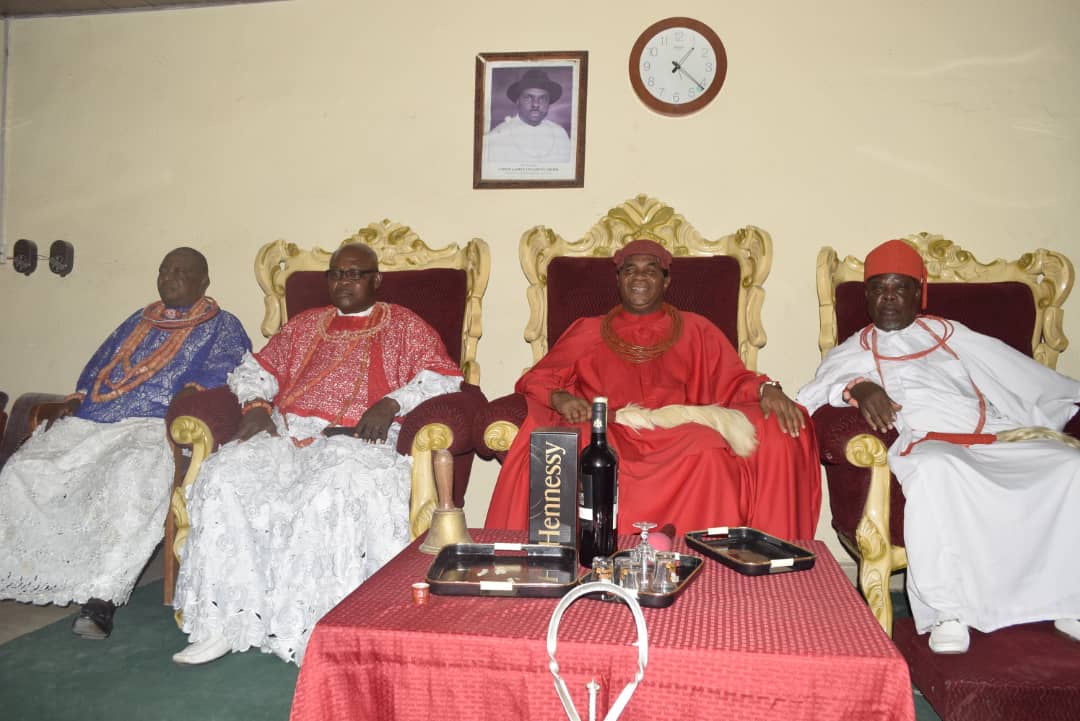
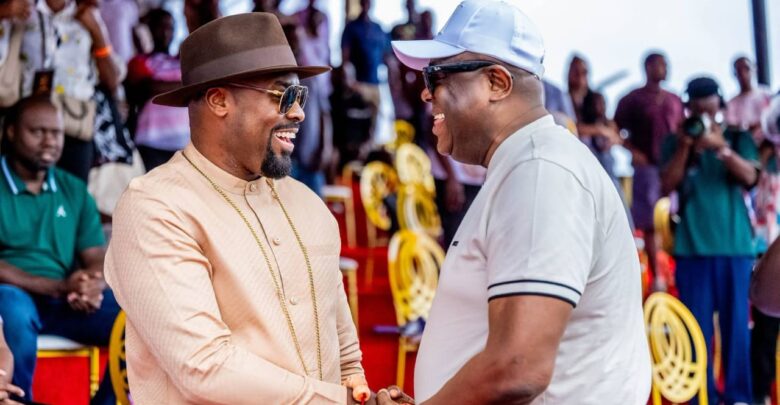
As part of the fifth anniversary celebration of the coronation of His Majesty, Ogiame Atuwatse III, CFR, the Olu of Warri Kingdom, a Unity Football Match was held at the Federal Government College, Warri. But for those who understand the history of Warri, the most important event was not what happened on the football pitch. It was what happened around it. The Olu of Warri extended a hand of fellowship to his neighbour, His Royal Majesty, Ataneru Igbi II, the Ovie of Agbarah Kingdom, by inviting him to the Unity Football Match. It was a gesture that carried a meaning far greater than the occasion itself.
It is also important to acknowledge, without diminishing the significance of the royal gesture itself, that moments such as this rarely happen by accident. Behind the public warmth of such encounters are often individuals who work quietly, patiently and without the searchlight of publicity to bring people together. There were those who, away from the cameras and the noise of social media, helped to open channels of communication and encouraged both sides towards this moment. Their contribution deserves recognition, even if their names are not mentioned. Peace is often built quietly before it is celebrated publicly. The handshake that the people saw on Saturday was the visible expression of conversations, persuasion and goodwill that had been taking place away from public view.
For some, it may have been another ceremonial appearance by traditional rulers. For those who understand Warri, it was much more. Warri has known the bitterness of division. It has known the suspicion that comes when neighbours begin to see one another through the narrow lens of ethnicity. It has known the damage that follows when history is turned from a source of knowledge into a weapon. For a people who have lived through the consequences of conflict, therefore, the sight of two traditional rulers reaching across an old divide could not have been an ordinary sight. The people saw it. They felt it. And for many, it was a moment of renewed hope that perhaps the peace that has eluded Warri for too long may finally be within reach.
I watched the development with particular emotion because I am a prince of both kingdoms. My maternal lineage connects me to one, while my paternal lineage connects me to the other. I do not therefore stand outside this story as an observer. I belong to both sides of it. The history of one kingdom is part of my history, just as the history of the other is part of mine. My relationship with the two kingdoms is not a convenient political arrangement. It is in my blood.
My connection to Warri, however, goes beyond royal lineage. I was born and raised in Warri. I grew up in the town, knew its communities and lived through the atmosphere created by its friendships, rivalries, anxieties and aspirations. The history of Warri was not something I later encountered in books. It was the environment in which I grew up. I knew the town before I knew public office. Warri was home before it became an assignment. That history was therefore never lost on me.
This is why I have always believed that the differences among our people should never be greater than the common future that binds us. It is also why my tenure as Chairman of Warri South Local Government Council from 2018 to 2024 was, for me, more than an opportunity to administer a local government. It was an opportunity to contribute to the healing and repositioning of a place to which I am deeply connected.
During my tenure, both Ogiame Atuwatse III, the Olu of Warri, and HRM Ataneru Igbi II, the Ovie of Agbarah Kingdom, ascended the thrones of their forebears. I was therefore privileged to serve at a time when both traditional institutions were passing through important transitions. I understood that whatever government did in Warri could not be divorced from the responsibility of ensuring that the communities around us had a peaceful environment in which to live, work and pursue their aspirations.
One of the principles that guided my administration was that peace was not simply a security matter. It was an economic and developmental matter. A town cannot prosper when its people are permanently suspicious of one another. Businesses cannot thrive where people are afraid. Young people cannot build their future where the language of conflict is louder than the language of opportunity. Investment does not follow insecurity, and prosperity does not grow where trust has died.
That was why my administration deliberately pursued dialogue and engagement with traditional rulers, community leaders, youth organisations, women, security agencies and other stakeholders. We understood that differences existed and that no amount of political rhetoric could wish them away. The task was to ensure that those differences did not become destruction. A peaceful society is not one without disagreement. It is one that has learnt how to disagree without destroying itself.
This thinking also informed the First and Second Warri Economic Summits organised by my administration. We wanted to change the conversation about Warri. For too long, the town had been known outside largely through stories of conflict, insecurity and ethnic tension. But those of us who know Warri know another story. There is the Warri of commerce and enterprise, the Warri of oil and gas, the Warri of maritime opportunities, the Warri of hardworking men and women and, most importantly, the Warri of young people who want a future.
The First Warri Economic Summit was therefore not merely an economic gathering. It was part of an effort to reposition the city and bring different interests around one table. The Second Warri Economic Summit continued that conversation. Government, business leaders, professionals, investors, traditional institutions and other stakeholders were brought together because Warri’s future could not be built by government alone. The message was straightforward: if we want a prosperous Warri, we must create the conditions for people to trust one another. Peace and development are not strangers. They are partners.
The literature on conflict transformation supports this approach. Conflict scholar John Paul Lederach has written extensively about the need to transform relationships and the structures that sustain conflict rather than merely managing one crisis after another. That lesson is relevant to Warri. We cannot continue to manage conflict forever. At some point, we must transform the relationships that produce it.
There is another concept in the literature that Warri must confront honestly: conflict entrepreneurs. These are individuals whose influence, relevance or material interests become tied to the continuation of conflict. They become powerful when communities are afraid of one another and important when people remain suspicious of their neighbours. Such people have little to gain from genuine reconciliation because peace can reduce the relevance they have built around division.
Warri must not allow such interests to stand in the way of peace. Those who have profited enough from our divisions should not now become obstacles to reconciliation. They have had enough. Warri has paid enough. Our people have sacrificed enough. Too many opportunities have been lost while some individuals have built influence, political relevance or material benefit around the divisions of the town. The time has come to close that chapter.
This is precisely why those who have made a career out of division must understand that the times are changing. While some people were quietly working to bring the two sides closer, others have spent years feeding suspicion, keeping old wounds open and profiting from the distrust of neighbours. Warri must now choose which of these two groups it wants to remember.
There is a personal side to this story that I cannot pretend does not exist. I have paid a price for believing that Warri’s people can rise above the politics of suspicion. In the 2022 party primaries, when I sought the opportunity to represent my people in the State House of Assembly, I narrowly lost the contest.
There were those who peddled the argument that because I belonged to both sides of the divide, I could not truly belong to either. Yet the facts told a different story. I received votes and support from people across both divides. I was able to reach people on both sides because I had always regarded both as part of my constituency and, more personally, as part of my own heritage.
But in the heat of the contest, ethnic extremists activated their arsenals of suspicion against me. They sought to convince people that a man who belonged to both sides could not be trusted by either. I narrowly lost. It was painful. I would be dishonest to say otherwise.
But I took the result in my stride. Leadership comes with sacrifices. Sometimes the sacrifice is losing an election. Sometimes it is being misunderstood. Sometimes it is watching people reject the very bridge you have spent years trying to build. But I never allowed that experience to turn me against the people. I did not retreat into ethnic grievance. I did not begin to preach the same suspicion that had been used against me. I accepted the result because I understood that if we genuinely believe in peace, we must be prepared to pay a price for it.
That experience made me even more convinced that Warri cannot continue along the path of ethnic suspicion. A man connected to both sides should be a bridge, not a problem. He should not be forced to choose which half of his identity is acceptable. My story is therefore not about an election I lost. It is about the kind of politics we must stop practising. If a person can receive the confidence of people from different communities, that should be celebrated as evidence that our divisions are not as permanent as some would have us believe. We should not punish people for building bridges. We should encourage them.
This is why Saturday’s football match was so significant. Football teaches us something that our politics often forgets. The ball does not know your tribe. The goalpost does not know your lineage. You play, you pass, you defend, you score, you win, you lose and, when the game is over, you shake hands. Perhaps Warri should learn from that simple lesson.
For too long, we have behaved as though one community must lose before another can win. But that is not how a city grows. When one community loses, Warri loses. When one community is insecure, the insecurity eventually affects everyone. When one community prospers, the opportunity exists for prosperity to spread. Our future is tied together whether we admit it or not.
This is why the fellowship between the Olu of Warri and the Ovie of Agbarah should be encouraged. It should not end with a football match. There should be more meetings, more visits, more conversations, more cultural exchanges and more economic partnerships. Traditional rulers have a special responsibility in this regard because their authority goes beyond politics. They can speak to the conscience of their people. When a king reaches out to a neighbour, his people see it. When two kings stand together, the message becomes even stronger.
The people of Warri are watching. They are tired of conflict. They want peace. They want opportunity. They want their children to grow up in a town where the first question is not which community someone belongs to, but what contribution that person can make.
That is the Warri we should build: a Warri where young people inherit opportunities instead of grievances; a Warri where businesses can thrive; a Warri where the maritime potential of the city is fully developed; a Warri where investors can come without fear; and a Warri where communities retain their identities while sharing a common destiny.
When I look back at my tenure as Chairman of Warri South, I do so with humility. No administration gets everything right. We did not. But we tried. We tried to create platforms for dialogue, make development part of the peace conversation, bring stakeholders together and change the narrative about Warri. The First and Second Warri Economic Summits were part of that effort. Our community engagements and emphasis on dialogue were part of it. Our belief that peace and economic development must move together was part of it.
Public office is temporary. The consequences of public decisions can be permanent. A chairman leaves office. A traditional institution remains. A road may deteriorate and a building may be renovated, but the memory of whether leaders helped their people live together can endure for generations. That is why I welcome the gesture we witnessed on Saturday, not as a politician seeking credit, but as a former chairman, as a son of Warri, as a man born and raised in this town and, most importantly, as a prince of both kingdoms. I have no interest in seeing one side triumph over the other. My interest is in seeing both sides prosper. My interest is in seeing Warri prosper.
Today, I write from far away in Canada, where I am vacationing. Distance has a strange way of making home more visible. When one is far away, one begins to see the things that truly matter. For me, Warri matters. It is where I was born. It is where I was raised. It is where I learnt the complexities of our people and where I learnt that beneath our differences there is a humanity that binds us. It is also the place I once had the privilege of serving.
So, from Canada, I watched the images from Warri and felt hopeful. Not because all our problems have disappeared. They have not. Not because all our differences have vanished. They have not. But because something important happened. Two kings met. One reached out to the other. The people saw it. And for a moment, the old walls looked less permanent.
That moment must not be wasted. The fifth anniversary of the coronation of the Olu of Warri should therefore become more than a celebration of a reign. It should also remind us of the kind of future we want to leave behind: a peaceful Warri, a prosperous Warri and a united Warri.
History will judge us by what we hand over. We can hand over our grievances or possibilities. We can hand over suspicion or trust. We can teach our children to remember every old wound or we can teach them how to heal. Saturday gave us a glimpse of the second possibility. Two kings, two traditional institutions, one football field, one people watching and perhaps one collective prayer: let this continue, let the fellowship deepen and let the peace spread.
Warri has waited long enough. The people deserve peace. The children deserve a future. And those who have profited from division should not stand in the way of the peace that the people have been waiting for.
Sometimes peace begins with a handshake. On Saturday, Warri saw one.
May it not be the last.
…Tidi, lawyer, economist, public policy scholar and former Chairman of Warri South Local Government Council, may be reached at mikkytidi@gmail.com
There are moments when a simple gesture says more than a thousand words. There are also moments when a football match becomes much more than a football match. Saturday, August 15, 2026, was one of such moments in Warri.
As part of the fifth anniversary celebration of the coronation of His Majesty, Ogiame Atuwatse III, CFR, the Olu of Warri Kingdom, a Unity Football Match was held at the Federal Government College, Warri. But for those who understand the history of Warri, the most important event was not what happened on the football pitch. It was what happened around it. The Olu of Warri extended a hand of fellowship to his neighbour, His Royal Majesty, Ataneru Igbi II, the Ovie of Agbarah Kingdom, by inviting him to the Unity Football Match. It was a gesture that carried a meaning far greater than the occasion itself.
It is also important to acknowledge, without diminishing the significance of the royal gesture itself, that moments such as this rarely happen by accident. Behind the public warmth of such encounters are often individuals who work quietly, patiently and without the searchlight of publicity to bring people together. There were those who, away from the cameras and the noise of social media, helped to open channels of communication and encouraged both sides towards this moment. Their contribution deserves recognition, even if their names are not mentioned. Peace is often built quietly before it is celebrated publicly. The handshake that the people saw on Saturday was the visible expression of conversations, persuasion and goodwill that had been taking place away from public view.
For some, it may have been another ceremonial appearance by traditional rulers. For those who understand Warri, it was much more. Warri has known the bitterness of division. It has known the suspicion that comes when neighbours begin to see one another through the narrow lens of ethnicity. It has known the damage that follows when history is turned from a source of knowledge into a weapon. For a people who have lived through the consequences of conflict, therefore, the sight of two traditional rulers reaching across an old divide could not have been an ordinary sight. The people saw it. They felt it. And for many, it was a moment of renewed hope that perhaps the peace that has eluded Warri for too long may finally be within reach.
I watched the development with particular emotion because I am a prince of both kingdoms. My maternal lineage connects me to one, while my paternal lineage connects me to the other. I do not therefore stand outside this story as an observer. I belong to both sides of it. The history of one kingdom is part of my history, just as the history of the other is part of mine. My relationship with the two kingdoms is not a convenient political arrangement. It is in my blood.
My connection to Warri, however, goes beyond royal lineage. I was born and raised in Warri. I grew up in the town, knew its communities and lived through the atmosphere created by its friendships, rivalries, anxieties and aspirations. The history of Warri was not something I later encountered in books. It was the environment in which I grew up. I knew the town before I knew public office. Warri was home before it became an assignment. That history was therefore never lost on me.
This is why I have always believed that the differences among our people should never be greater than the common future that binds us. It is also why my tenure as Chairman of Warri South Local Government Council from 2018 to 2024 was, for me, more than an opportunity to administer a local government. It was an opportunity to contribute to the healing and repositioning of a place to which I am deeply connected.
During my tenure, both Ogiame Atuwatse III, the Olu of Warri, and HRM Ataneru Igbi II, the Ovie of Agbarah Kingdom, ascended the thrones of their forebears. I was therefore privileged to serve at a time when both traditional institutions were passing through important transitions. I understood that whatever government did in Warri could not be divorced from the responsibility of ensuring that the communities around us had a peaceful environment in which to live, work and pursue their aspirations.
One of the principles that guided my administration was that peace was not simply a security matter. It was an economic and developmental matter. A town cannot prosper when its people are permanently suspicious of one another. Businesses cannot thrive where people are afraid. Young people cannot build their future where the language of conflict is louder than the language of opportunity. Investment does not follow insecurity, and prosperity does not grow where trust has died.
That was why my administration deliberately pursued dialogue and engagement with traditional rulers, community leaders, youth organisations, women, security agencies and other stakeholders. We understood that differences existed and that no amount of political rhetoric could wish them away. The task was to ensure that those differences did not become destruction. A peaceful society is not one without disagreement. It is one that has learnt how to disagree without destroying itself.
This thinking also informed the First and Second Warri Economic Summits organised by my administration. We wanted to change the conversation about Warri. For too long, the town had been known outside largely through stories of conflict, insecurity and ethnic tension. But those of us who know Warri know another story. There is the Warri of commerce and enterprise, the Warri of oil and gas, the Warri of maritime opportunities, the Warri of hardworking men and women and, most importantly, the Warri of young people who want a future.
The First Warri Economic Summit was therefore not merely an economic gathering. It was part of an effort to reposition the city and bring different interests around one table. The Second Warri Economic Summit continued that conversation. Government, business leaders, professionals, investors, traditional institutions and other stakeholders were brought together because Warri’s future could not be built by government alone. The message was straightforward: if we want a prosperous Warri, we must create the conditions for people to trust one another. Peace and development are not strangers. They are partners.
The literature on conflict transformation supports this approach. Conflict scholar John Paul Lederach has written extensively about the need to transform relationships and the structures that sustain conflict rather than merely managing one crisis after another. That lesson is relevant to Warri. We cannot continue to manage conflict forever. At some point, we must transform the relationships that produce it.
There is another concept in the literature that Warri must confront honestly: conflict entrepreneurs. These are individuals whose influence, relevance or material interests become tied to the continuation of conflict. They become powerful when communities are afraid of one another and important when people remain suspicious of their neighbours. Such people have little to gain from genuine reconciliation because peace can reduce the relevance they have built around division.
Warri must not allow such interests to stand in the way of peace. Those who have profited enough from our divisions should not now become obstacles to reconciliation. They have had enough. Warri has paid enough. Our people have sacrificed enough. Too many opportunities have been lost while some individuals have built influence, political relevance or material benefit around the divisions of the town. The time has come to close that chapter.
This is precisely why those who have made a career out of division must understand that the times are changing. While some people were quietly working to bring the two sides closer, others have spent years feeding suspicion, keeping old wounds open and profiting from the distrust of neighbours. Warri must now choose which of these two groups it wants to remember.
There is a personal side to this story that I cannot pretend does not exist. I have paid a price for believing that Warri’s people can rise above the politics of suspicion. In the 2022 party primaries, when I sought the opportunity to represent my people in the State House of Assembly, I narrowly lost the contest.
There were those who peddled the argument that because I belonged to both sides of the divide, I could not truly belong to either. Yet the facts told a different story. I received votes and support from people across both divides. I was able to reach people on both sides because I had always regarded both as part of my constituency and, more personally, as part of my own heritage.
But in the heat of the contest, ethnic extremists activated their arsenals of suspicion against me. They sought to convince people that a man who belonged to both sides could not be trusted by either. I narrowly lost. It was painful. I would be dishonest to say otherwise.
But I took the result in my stride. Leadership comes with sacrifices. Sometimes the sacrifice is losing an election. Sometimes it is being misunderstood. Sometimes it is watching people reject the very bridge you have spent years trying to build. But I never allowed that experience to turn me against the people. I did not retreat into ethnic grievance. I did not begin to preach the same suspicion that had been used against me. I accepted the result because I understood that if we genuinely believe in peace, we must be prepared to pay a price for it.
That experience made me even more convinced that Warri cannot continue along the path of ethnic suspicion. A man connected to both sides should be a bridge, not a problem. He should not be forced to choose which half of his identity is acceptable. My story is therefore not about an election I lost. It is about the kind of politics we must stop practising. If a person can receive the confidence of people from different communities, that should be celebrated as evidence that our divisions are not as permanent as some would have us believe. We should not punish people for building bridges. We should encourage them.
This is why Saturday’s football match was so significant. Football teaches us something that our politics often forgets. The ball does not know your tribe. The goalpost does not know your lineage. You play, you pass, you defend, you score, you win, you lose and, when the game is over, you shake hands. Perhaps Warri should learn from that simple lesson.
For too long, we have behaved as though one community must lose before another can win. But that is not how a city grows. When one community loses, Warri loses. When one community is insecure, the insecurity eventually affects everyone. When one community prospers, the opportunity exists for prosperity to spread. Our future is tied together whether we admit it or not.
This is why the fellowship between the Olu of Warri and the Ovie of Agbarah should be encouraged. It should not end with a football match. There should be more meetings, more visits, more conversations, more cultural exchanges and more economic partnerships. Traditional rulers have a special responsibility in this regard because their authority goes beyond politics. They can speak to the conscience of their people. When a king reaches out to a neighbour, his people see it. When two kings stand together, the message becomes even stronger.
The people of Warri are watching. They are tired of conflict. They want peace. They want opportunity. They want their children to grow up in a town where the first question is not which community someone belongs to, but what contribution that person can make.
That is the Warri we should build: a Warri where young people inherit opportunities instead of grievances; a Warri where businesses can thrive; a Warri where the maritime potential of the city is fully developed; a Warri where investors can come without fear; and a Warri where communities retain their identities while sharing a common destiny.
When I look back at my tenure as Chairman of Warri South, I do so with humility. No administration gets everything right. We did not. But we tried. We tried to create platforms for dialogue, make development part of the peace conversation, bring stakeholders together and change the narrative about Warri. The First and Second Warri Economic Summits were part of that effort. Our community engagements and emphasis on dialogue were part of it. Our belief that peace and economic development must move together was part of it.
Public office is temporary. The consequences of public decisions can be permanent. A chairman leaves office. A traditional institution remains. A road may deteriorate and a building may be renovated, but the memory of whether leaders helped their people live together can endure for generations. That is why I welcome the gesture we witnessed on Saturday, not as a politician seeking credit, but as a former chairman, as a son of Warri, as a man born and raised in this town and, most importantly, as a prince of both kingdoms. I have no interest in seeing one side triumph over the other. My interest is in seeing both sides prosper. My interest is in seeing Warri prosper.
Today, I write from far away in Canada, where I am vacationing. Distance has a strange way of making home more visible. When one is far away, one begins to see the things that truly matter. For me, Warri matters. It is where I was born. It is where I was raised. It is where I learnt the complexities of our people and where I learnt that beneath our differences there is a humanity that binds us. It is also the place I once had the privilege of serving.
So, from Canada, I watched the images from Warri and felt hopeful. Not because all our problems have disappeared. They have not. Not because all our differences have vanished. They have not. But because something important happened. Two kings met. One reached out to the other. The people saw it. And for a moment, the old walls looked less permanent.
That moment must not be wasted. The fifth anniversary of the coronation of the Olu of Warri should therefore become more than a celebration of a reign. It should also remind us of the kind of future we want to leave behind: a peaceful Warri, a prosperous Warri and a united Warri.
History will judge us by what we hand over. We can hand over our grievances or possibilities. We can hand over suspicion or trust. We can teach our children to remember every old wound or we can teach them how to heal. Saturday gave us a glimpse of the second possibility. Two kings, two traditional institutions, one football field, one people watching and perhaps one collective prayer: let this continue, let the fellowship deepen and let the peace spread.
Warri has waited long enough. The people deserve peace. The children deserve a future. And those who have profited from division should not stand in the way of the peace that the people have been waiting for.
Sometimes peace begins with a handshake. On Saturday, Warri saw one.
May it not be the last.
…Tidi, lawyer, economist, public policy scholar and former Chairman of Warri South Local Government Council, may be reached at mikkytidi@gmail.com