By Our Correspondent Warri
The Oghara Study Group (OSG), in collaboration with the Palace of the Ovie of Oghara Kingdom, has called for a people-centred, professional and accountable state policing system, warning that decentralising policing without adequate safeguards could worsen political interference, abuse and impunity.
The group made the call following the successful Oghara Pre-Town Hall Webinar on State Policing Reform held on Thursday, August 13, 2026, ahead of the Oghara Stakeholders’ Town Hall Meeting on Security and Development scheduled for Saturday, August 15, 2026. In a statement signed by Rev. David Ugolor and Prof. Charles Eghweree, Co-Conveners of OSG, the group said Oghara was determined to move beyond merely expressing concerns over insecurity and contribute practical, evidence-based recommendations to the Presidential Working Group on the National Policing Bill.
The statement said the webinar, themed “From Community Crisis to National Reform: Rethinking State Policing through the Oghara Experience,” brought together traditional leaders, political leaders, academics, civil society organisations, policing and governance experts and community stakeholders to examine Nigeria’s emerging state-policing framework through the lived experiences of Oghara. It said the initiative was aimed at ensuring that communities affected by insecurity become active participants in shaping the policies designed to protect them.
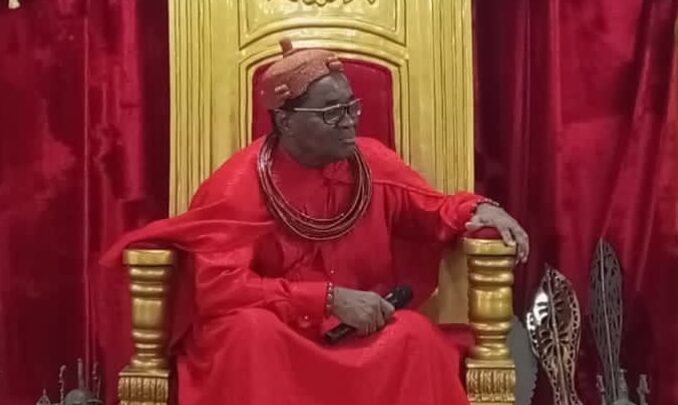
The webinar received the support and participation of His Royal Majesty, the Ovie of Oghara Kingdom, whose involvement provided the traditional and institutional foundation for the initiative, while His Excellency Chief James Onanefe Ibori, former Governor of Delta State and distinguished son of Oghara Kingdom, made special remarks on the state-policing debate, linking it to the broader question of true federalism and urging Oghara to develop and submit its own position to the national reform process.
Also participating was Dr. Jacob Ighere, President-General of the Oghara Elite Forum, who supported the need for a policing system capable of recognising Nigeria’s different security realities and responding to communities according to their peculiar circumstances. Other experts included Dr. Sonia Warner, international development and policing expert and former FCDO staff; Dr. Uche Igwe, public policy and governance expert; Mr. Okechukwu Nwanguma, Executive Director, Rule of Law and Accountability Advocacy Centre (RULAAC); Olumayowa Olaniyi, representing CLEEN Foundation; and Prof. Charles Eghweree, political scientist and Co-Convener of OSG.
Participants agreed that the establishment of state police must not be confused with police reform, stressing that while decentralised policing could bring security closer to communities and improve the use of local intelligence, it could also reproduce existing weaknesses or create fresh dangers if adequate safeguards were not established.
The webinar consequently called for state policing to be established as a professional public service that responds to citizens, understands local realities, respects human rights and operates under effective democratic accountability. Participants identified constitutional and statutory safeguards against political, ethnic, religious and sectional capture, as well as independent civilian oversight and complaints mechanisms with genuine investigative and sanctioning powers, as essential components of any new policing framework.
They also demanded merit-based recruitment, proper vetting, certification and continuous training of personnel, strong protection of human rights and due process, clear and enforceable rules on firearms and the use of force, transparent and sustainable funding and improved police welfare. The group further stressed the need for meaningful participation by traditional institutions, civil society organisations, women, youths, farmers, businesses and other community stakeholders, alongside reliable community-intelligence and feedback mechanisms and independent monitoring of public confidence and police performance.
The webinar examined Oghara’s own security experience, including kidnapping, violent attacks, threats to farmers and livelihoods, drug-related risks and inadequate follow-up and accountability. The participants stressed that insecurity in the Kingdom goes beyond policing because it affects freedom of movement, farming, food security, economic activities, education, investment, healthcare and the general wellbeing of residents.
Against this background, OSG said Oghara’s experience could provide an important community-based model for demonstrating how local knowledge and evidence can contribute to national policy development. The group said it would work with the Palace and other stakeholders to consolidate the recommendations from the webinar into an Oghara Declaration on Security and Development and a Policy Memorandum on the National Policing Bill.
According to the group, the proposed recommendations will include constitutional protection for political neutrality, diversity, non-discrimination, professional independence and human-rights protection; independent civilian oversight and accessible complaints and redress mechanisms; clear standards for recruitment, integrity screening, training and certification; transparent and sustainable funding arrangements; strong controls over firearms and the use of force; and clear rules governing the relationship between federal and state police services.
The recommendations will also seek institutionalised participation of traditional institutions, civil society organisations, women and youth in policing governance, community-based intelligence and early-warning systems, transparent public reporting on policing, budgets, complaints and use of force, as well as measures linking security reform with youth employment, drug-use prevention, protection of livelihoods and safe access to farms.
The group said the recommendations from the webinar would feed directly into the Oghara Stakeholders’ Town Hall Meeting on Security and Development on Saturday, August 15, where a wider range of stakeholders from across Oghara Kingdom, including traditional institutions, women, youths, farmers, professionals, businesses, community leaders and civil society organisations, would participate. The objective, it said, was to produce a collective and inclusive Oghara position reflecting the experiences and aspirations of the entire Kingdom.
OSG said the final Oghara Declaration and Policy Memorandum would subsequently be submitted to the Presidential Working Group on the National Policing Bill as the Kingdom’s contribution to the ongoing national consultation. The group reiterated its commitment to working with His Royal Majesty, the Ovie of Oghara Kingdom, the Oghara Elite Forum, traditional institutions, government and security agencies, civil society organisations and all sons and daughters of Oghara Kingdom to promote peace, security and development.
The statement said the ultimate objective was not merely to create another layer of policing but to build a security system that protects citizens, earns public trust, respects rights, uses local knowledge, prevents impunity and makes government more accountable. “The Oghara experience demonstrates that communities affected by insecurity should not remain passive victims. They can become active partners in designing the solutions and shaping the national policies that affect their future,” the group said, reaffirming its message: “One Kingdom • One Voice • One Future.”