


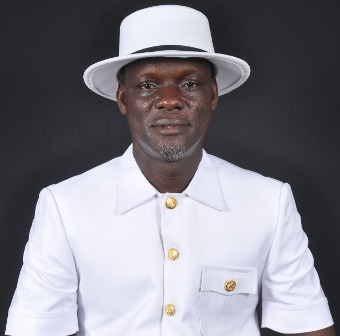
By Francis Sadhere
ASABA — Renowned peace and development advocate, Comrade Mulade Sheriff, has issued a passionate call to the major ethnic nationalities in Delta State to embrace unity and development in the interest of economic growth and peaceful coexistence.
Mulade, a United Nations Peace Ambassador and National Coordinator of the Center for Peace and Environmental Justice (CEPEJ), made this appeal during a media briefing on Friday, emphasizing the need for the Urhobo, Itsekiri, and Ijaw ethnic groups to collaborate rather than compete in ways that hinder progress.
According to him, the three ethnic groups form the backbone of the state’s economy and must play proactive roles in fostering development.
“We cannot continue to fight ourselves, oppose development, and chase away investors that will create employment opportunities for our teeming youths because of selfish interests,” Mulade warned.
“I want to strongly appeal and advise our revered traditional rulers and political leaders to shun hatred and embrace peace, unity, and development for the interest and progress of our dear state,” he added.
Mulade, who also holds the traditional title of Ibe Serimowei of the Gbaramatu Kingdom, stressed that the vision of a prosperous Delta State can only be realized through ethnic cooperation and genuine partnership with government at all levels.
He further expressed confidence in the efforts of both the federal and state governments to drive investment and development into the region.
“It is pertinent to state that the current Federal Government led by President Bola Ahmed Tinubu GCFR and the State Government under the leadership of Rt. Hon. Sheriff Oborevwori are doing everything humanly possible to attract investors to the state through ongoing state projects and federal presence,” he stated.
Mulade reiterated that while governments may initiate development frameworks, the success of those efforts largely depends on the enabling environment created by local communities and their leaders.
“The big three ethnic groups in the State need to unite and play strategic roles that will aid both the federal and state governments in delivering democratic dividends to the people,” he said.
He described Delta State as a land rich in both human and natural resources, arguing that these should be harnessed for sustainable development rather than being used as tools for division.
“Delta State is blessed with an abundance of human capital and natural endowments. Rather than fighting ourselves, let us harness the potentials of influence across the State to support the Governor, Rt. Hon. Sheriff Oborevwori, and President Bola Ahmed Tinubu for Deltans to enjoy the dividends of democracy as the economic livewire of Nigeria,” Mulade advised.
The CEPEJ boss emphasized that peace and stability are non-negotiable foundations for attracting investors, expanding job creation, and accelerating infrastructural development in the state.
He also called on civil society organizations, youth leaders, and the private sector to support peacebuilding initiatives and development partnerships.
Mulade’s comments come at a time when stakeholders in the Niger Delta region are grappling with the need to balance ethnic interests with collective advancement, particularly in light of ongoing government projects and infrastructural investments aimed at revamping the region’s economy.
As part of his ongoing advocacy, Mulade said CEPEJ would continue to engage with traditional institutions, political actors, and community-based organizations to promote peace, social inclusion, and sustainable development.
“Our destiny as Deltans is intertwined. We must rise above parochial interests and see ourselves as partners in progress,” he said.


