…Urges Governor Okowa to Direct DESOPADEC to Wake up
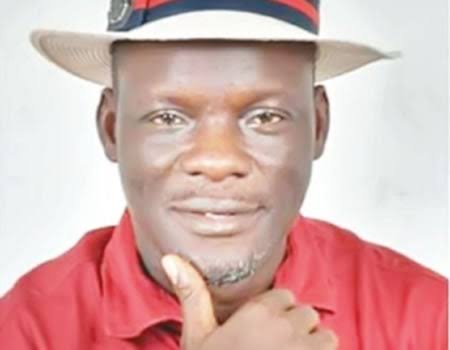
A Delta State born renowned human rights and environment activist, Comrade Mulade Sheriff has drawn the attention of the State Governor, Dr. Ifeanyi Okowa to the unpleasant pattern of distributing the food stuff palliatives to cushion the economic effects of the 28 days lockdown order by the State Government on the less privileged.
Speaking at the weekend at his country home in Benikrukru Community of Gbaramatu Kingdom in Warri South West LGA of Delta State, Chief Mulade who is also the National Coordinator of Center for Peace and Environmental Justice, CEPEJ, commended the Delta State Government for distributing food stuffs to the 25 LGAs from the State’s Food Bank during the lockdown period. He however expressed disappointment over the quantity of food stuffs and other items that were distributed.
He drew the attention of the State Governor to the selective pattern adopted in the distribution of the food items in favour of members of a particular political party, describing it as unacceptable. He said all Deltans should benefit from the State Government irrespective of political affiliations as hunger knows no political boundaries.
On the one million (Ankara) nose masks to be produced by the Delta State Government for distribution to Deltans, the human rights activist advised that the effort should be devoid of political bias for the sake of integrity on the part of Government. He noted that every Deltan has the right to be protected from COVID-19, adding that one million (Ankara) nose masks would be grossly inadequate for the over 4 million people living in Delta State who deserve to be protected from the killer virus.
While commending the Managing Director of DESOPADEC, Chief Bashorun Askia Ogie, and the Executive Director, Planning Research and Statistics, DESOPADEC, Comrade Shedrack Agediga, for distributing palliatives through their personal Foundations to their immediate communities and constituencies towards cushioning the hunger effect of the lockdown period, Chief Mulade expressed disappointment over DESOPADEC’s failure to reach out to their host communities at this time of need. He said this is the best time for people in the State to benefit from Government’s interventionist Agencies, Commissions and Boards but expressed shock that DESOPADEC did not share a grain of rice to residents of its mandate areas including riverine/coastal communities, saying that it did not speak well of the Commission.
He therefore called on the Board of DESOPADEC to do the needful by providing food stuffs and other necessary items for people in its mandate areas, instead of hiding under the umbrella of personal donations by individual Foundations to present DESOPADEC’s Weekly Report on AIT, describing such acts as deceptive, fraudulent and criminal, and urged the Governor to call the Commission to order.
Chief Mulade alleged that some political appointees use the State funds for jamborees and personal promotion, instead of using same to buy and distribute food stuffs to the poor and vulnerable in the various communities. He then charged the Delta State Governor, Dr. Ifeanyi Okowa and other political office holders in the State to be committed to the welfare of all Deltans, irrespective of political affiliations. He advised against playing politics with the coronavirus and using the situation to drain the State economy.