By Francis Sadhere, Warri
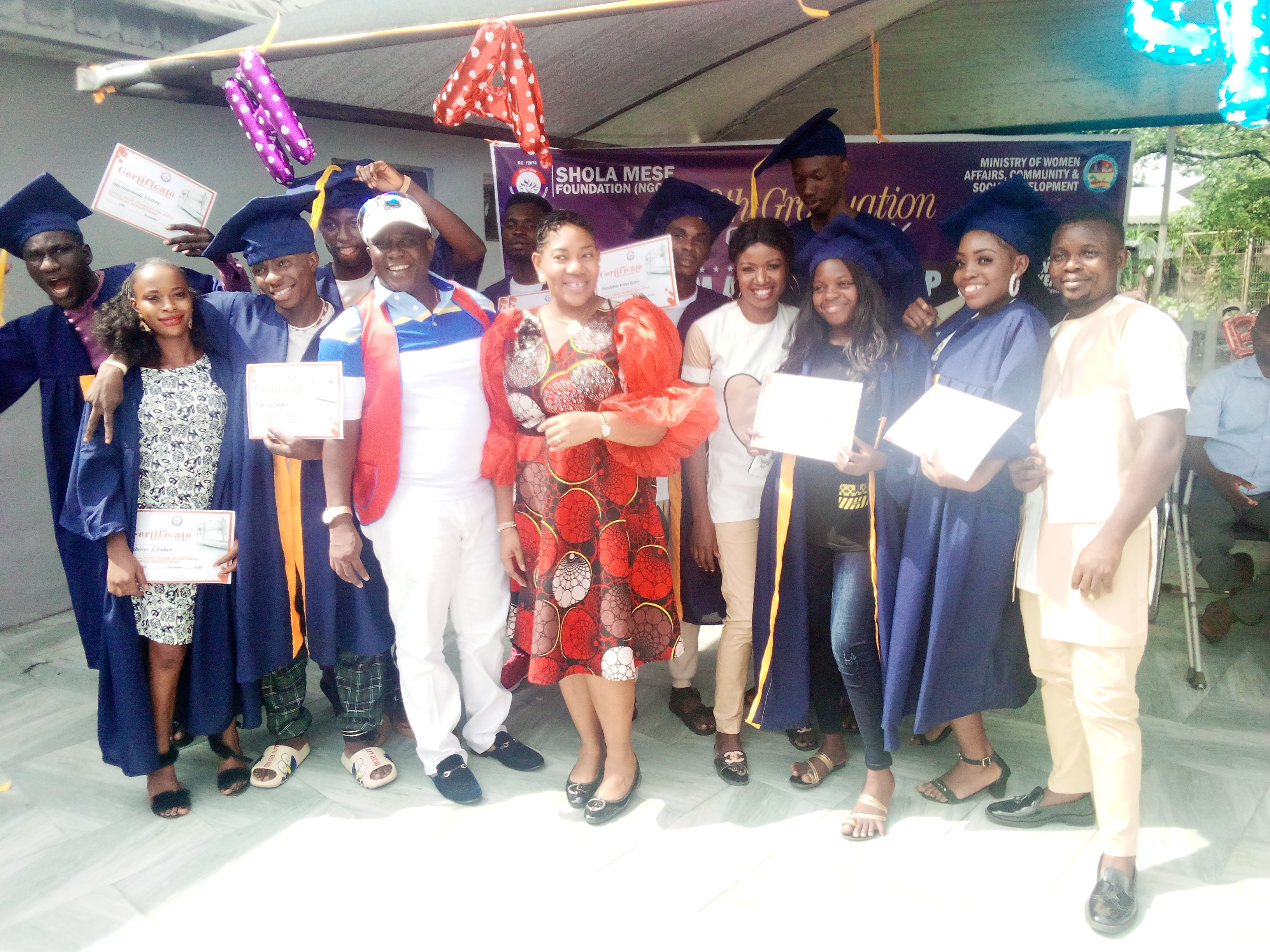
A Non-Governmental Organization, Shola Mese Foundation, during weekend held it’s 8th graduation ceremony where it graduated 42 youths freely trained in various vocational skills in Effurun, Uvwie Local Government Area of Delta.
Founder and President of the the foundation, Mr Shola Mese appealed to the affluents in the society to take part in empowering the youth to reduce crime in the society.

The theme of the ceremony was: “From Apprenticeship to Greatness”
According to Mese, “My advice is that the rich in the society should key into things like this by encouraging the youth.
“No matter how little, if you cannot do it, you can reach out to NGOs and assist them in one way or the other.
“If we do not encourage the youth today, we do not know who will be the next victim tomorrow.”

Mese said that the 42 students graduated in four different careers which included: Catering, Graphics, Tailoring, Igele and makeover noting that the duration of the training spanned between three months and one year.
“It is my passion to serve humanity. I want to see how I can in my own little way reduce crime in the society because an idle mind is the devil’s workshop.
“The training is free. Instead of them staying at home causing problems to their families and being lured by bad friends, they spend time here and go home with something beneficial,” he said.

Also speaking, Mr Harami Muawa, the Deputy Area Commander, National Drugs, Law and Enforcement Agency (NDLEA), Warri office commended Mese for the humanitarian gesture.
Muawa who was represented by Mrs Adeosun Olabisi said that prevention of drug abuse by youth and teenagers was better than it’s treatment.
“Government is concerned about the consequences of drug abuse and it’s linkage with other conventional and organised crime such as terrorism, kidnapping and others.

“Curbing drug abuse has been a major challenge affecting the growth and development of our society and needs urgent attention.
“The solution to tackling drug abuse among youth and teenagers includes the provision of employment, vocational skills, supporting families and women and creating awareness on the dangers associated with drug abuse,” he said.
In his remark, the President, Empowerment for Global Disability and Initiative, Dr Kenneth Edun, urged the graduands to see the training as a stepping stone to their future endeavors.
“Graduation is not an end goal in itself, instead it is a part of the larger journey of life.
“Life is a journey and all accomplishments we achieved during the various training should be taken as a starting points for further achievements,” Edun advised.
One of the graduands Miss Ruth Eromosele of the Tailoring department who spoke on behalf of others thanked Mese for the gesture.
“Silver and Gold, we do not have, we prayed that the almighty God will continue to keep and reward you richly,” she prayed.
Shola Mese Foundation is an organization with emphasis on youths, it carries out focused based campaigns against the intake of hard drugs amongst youths, and empowering them with different vocational skills, thereby making them resourceful to the society.