News
Ijaw Leader Mulade Demands Review of ₦400bn Delta Projects, Decries Marginalisation of Riverine Communities


By Francis Sadhere, Warri
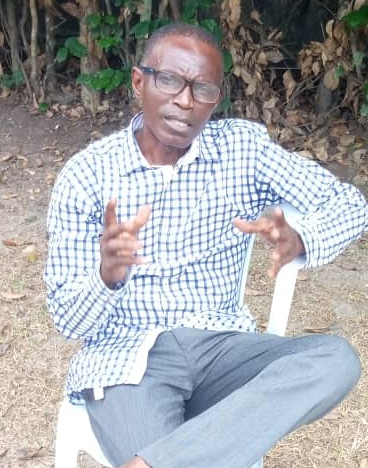
A prominent Ijaw leader and environmental rights advocate, Mulade Sheriff, has called on the Governor of Delta State, Sheriff Oborevwori, to urgently review and expand the distribution of projects under the state government’s over ₦400 billion infrastructure development plan, warning that the current template leaves Ijaw riverine communities largely sidelined.
Mulade made the call in a press statement at the weekend while reacting to the list of projects recently approved by the Delta State Executive Council for various parts of the state.
He expressed concern that despite the huge economic contributions of Ijaw communities to the prosperity of Delta State and Nigeria through oil and gas resources and the blue economy, the riverine areas appear to have received little or no commensurate infrastructural development in the latest approvals.
According to him, it is unacceptable that communities responsible for a significant share of the state’s economic strength continue to suffer from poor infrastructure and neglect.
Mulade argued that about 90 per cent of the wealth that sustains the state economy is derived from the rural and riverine belt, yet those same communities remain deprived of meaningful development.
He noted that while the state government approved several projects including road constructions, rehabilitations, erosion control works, market infrastructure, housing developments, judicial facilities and educational projects across Warri, Uvwie, Udu, Ughelli, Okpe, Sapele, Asaba, Ika, Ndokwa and Isoko areas, the Ijaw axis did not receive adequate attention.
Among the projects approved by the government are the reconstruction of Warri Internal Ring Road Phase 2, rehabilitation of sections of the Trans-Warri Ode-Itsekiri Road, construction of roads in Ekpan, Udu, Ughelli, Oghara, Abraka, Asaba, Sapele, Kwale and Agbor, as well as institutional projects such as hostels in state universities, judges’ quarters, police divisional headquarters for the 25 local government areas and the completion of the Senate/Administrative Building at Delta State University, Abraka.
However, Mulade maintained that the projects failed to significantly address the infrastructural needs of the riverine communities.
He observed that aside from the proposed Omadino–Okerenkoko–Escravos Road being pursued through collaboration between the Delta State Government, the Niger Delta Development Commission and Chevron Nigeria Limited, the newly approved projects did not reflect the developmental realities of Ijaw areas.
The Ijaw leader warned that the persistent lack of roads, bridges and other essential infrastructure in the riverine communities continues to slow economic growth, deepen hardship and isolate the region from mainstream development.
He stressed that improved connectivity across the riverine belt would stimulate commerce, attract investment, boost tourism, strengthen security and enhance social and political integration within the state.
Mulade therefore urged the state government to urgently prioritise critical infrastructure capable of opening up the coastal communities and unlocking their economic potential.
Among the projects he recommended for immediate approval and completion are the Ayakoromo Bridge and the construction of the Burutu–Ogulagha Road linking Burutu, headquarters of Burutu Local Government Area, with Ogulagha community which hosts the strategic Forcados Terminal.
He also advocated the construction of the Kurutie–Oporoza–Ogidigben–Yokri Road, which would connect the Nigerian Maritime University, Kurutie Campus, and link up with the existing Yokri–Obotobo Road to significantly improve movement across Ijaw and Itsekiri communities.
Mulade further described the situation in Egbema Kingdom in Warri North Local Government Area as a painful example of long-standing neglect, alleging that the area has been marginalised in terms of development and infrastructure.
He appealed to Governor Oborevwori to use the ₦400 billion infrastructure programme as an opportunity to correct what he described as years of imbalance and ensure equitable development across all ethnic nationalities in the state.
The Ibe-Sorimowei of the ancient oil-rich Gbaramatu Kingdom also urged Ijaw political leaders, traditional rulers and elected representatives to intensify advocacy and constructive engagement to secure greater development for their communities.
While commending Governor Oborevwori for ongoing efforts to develop Delta State, Mulade expressed hope that the administration would demonstrate fairness and inclusiveness by revisiting the project distribution template to ensure that Ijaw communities are not left behind.
A prominent Ijaw leader and environmental rights advocate, Mulade Sheriff, has called on the Governor of Delta State, Sheriff Oborevwori, to urgently review and expand the distribution of projects under the state government’s over ₦400 billion infrastructure development plan, warning that the current template leaves Ijaw riverine communities largely sidelined.
Mulade made the call in a press statement at the weekend while reacting to the list of projects recently approved by the Delta State Executive Council for various parts of the state.
He expressed concern that despite the huge economic contributions of Ijaw communities to the prosperity of Delta State and Nigeria through oil and gas resources and the blue economy, the riverine areas appear to have received little or no commensurate infrastructural development in the latest approvals.
According to him, it is unacceptable that communities responsible for a significant share of the state’s economic strength continue to suffer from poor infrastructure and neglect.
Mulade argued that about 90 per cent of the wealth that sustains the state economy is derived from the rural and riverine belt, yet those same communities remain deprived of meaningful development.
He noted that while the state government approved several projects including road constructions, rehabilitations, erosion control works, market infrastructure, housing developments, judicial facilities and educational projects across Warri, Uvwie, Udu, Ughelli, Okpe, Sapele, Asaba, Ika, Ndokwa and Isoko areas, the Ijaw axis did not receive adequate attention.
Among the projects approved by the government are the reconstruction of Warri Internal Ring Road Phase 2, rehabilitation of sections of the Trans-Warri Ode-Itsekiri Road, construction of roads in Ekpan, Udu, Ughelli, Oghara, Abraka, Asaba, Sapele, Kwale and Agbor, as well as institutional projects such as hostels in state universities, judges’ quarters, police divisional headquarters for the 25 local government areas and the completion of the Senate/Administrative Building at Delta State University, Abraka.
However, Mulade maintained that the projects failed to significantly address the infrastructural needs of the riverine communities.
He observed that aside from the proposed Omadino–Okerenkoko–Escravos Road being pursued through collaboration between the Delta State Government, the Niger Delta Development Commission and Chevron Nigeria Limited, the newly approved projects did not reflect the developmental realities of Ijaw areas.
The Ijaw leader warned that the persistent lack of roads, bridges and other essential infrastructure in the riverine communities continues to slow economic growth, deepen hardship and isolate the region from mainstream development.
He stressed that improved connectivity across the riverine belt would stimulate commerce, attract investment, boost tourism, strengthen security and enhance social and political integration within the state.
Mulade therefore urged the state government to urgently prioritise critical infrastructure capable of opening up the coastal communities and unlocking their economic potential.
Among the projects he recommended for immediate approval and completion are the Ayakoromo Bridge and the construction of the Burutu–Ogulagha Road linking Burutu, headquarters of Burutu Local Government Area, with Ogulagha community which hosts the strategic Forcados Terminal.
He also advocated the construction of the Kurutie–Oporoza–Ogidigben–Yokri Road, which would connect the Nigerian Maritime University, Kurutie Campus, and link up with the existing Yokri–Obotobo Road to significantly improve movement across Ijaw and Itsekiri communities.
Mulade further described the situation in Egbema Kingdom in Warri North Local Government Area as a painful example of long-standing neglect, alleging that the area has been marginalised in terms of development and infrastructure.
He appealed to Governor Oborevwori to use the ₦400 billion infrastructure programme as an opportunity to correct what he described as years of imbalance and ensure equitable development across all ethnic nationalities in the state.
The Ibe-Sorimowei of the ancient oil-rich Gbaramatu Kingdom also urged Ijaw political leaders, traditional rulers and elected representatives to intensify advocacy and constructive engagement to secure greater development for their communities.
While commending Governor Oborevwori for ongoing efforts to develop Delta State, Mulade expressed hope that the administration would demonstrate fairness and inclusiveness by revisiting the project distribution template to ensure that Ijaw communities are not left behind.